Blogs
Snow Corn Snake: Facts, Size, Diet and Care Basics

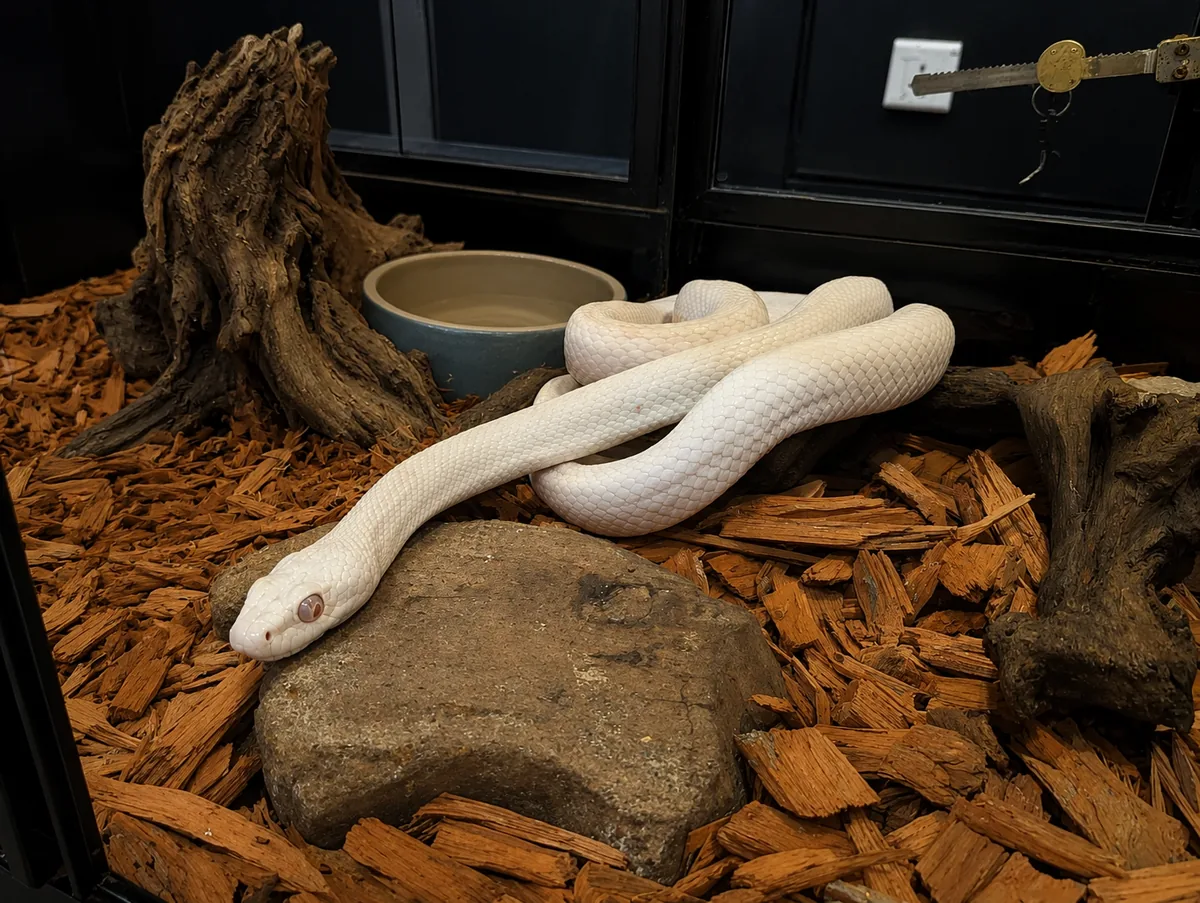
Pure white with ruby-pink eyes, the snow corn snake is one of the most eye-catching snakes you can see in a showroom. It is a colour form of the corn snake (Pantherophis guttatus), a calm, non-venomous snake that is popular all over the world. Here are the essentials.
Quick facts
| Scientific name | Pantherophis guttatus (corn snake) |
|---|---|
| Origin | Southeastern United States |
| Habitat | Woodland, rocky hillsides and farmland |
| Adult size | About 1.2 to 1.5 m |
| Lifespan | 15 to 20 years in captivity |
| Diet | Rodents such as mice and rats |
| Activity | Mostly active at dawn, dusk and night |
| Venom | None. It is a constrictor. |
What makes a snow corn snake special?
A wild corn snake is orange or brown with red blotches. A snow corn snake has two inherited traits that remove both the black and the red pigment, which leaves a white or very pale snake, sometimes with a faint yellow or pink tint, and pink eyes. This colour form only exists in captive breeding. In nature, a snake this pale would be easy for predators to spot.
Where do corn snakes come from?
Corn snakes are native to the southeastern United States. They live in woodland, on rocky hillsides and around farms and grain stores, where rodents gather. They hide under bark and logs and in burrows during the day.
How big do they grow?
A corn snake is slim and light. Adults usually reach 1.2 to 1.5 m, and a few grow a little longer. With good care they can live 15 to 20 years in captivity, so owning one is a long commitment.
What do corn snakes eat?
Corn snakes are constrictors. They wrap around their prey and squeeze it, and they are not venomous. In the wild they eat mice, rats, small birds and eggs. In captivity they are fed appropriately sized mice, usually frozen and thawed, which is safer than live prey for both the snake and the owner.
A day in the life
Corn snakes are most active at dawn, dusk and during the night. They spend much of the day hidden away. They are good climbers and very good at escaping, so they need a secure lid that locks.
Did you know?
Snakes shed their skin in one piece as they grow. Just before shedding, the eyes turn cloudy blue and the colours look dull. A few days later the old skin comes off like an inside-out sock and the snake looks brighter than before.
Is a corn snake a good pet?
Corn snakes are one of the most popular first snakes because they are calm and hardy and do not need a huge space. They still need an escape-proof enclosure with a warm side (about 28 to 30 °C) and a cooler side (about 22 to 24 °C), a hiding place on each side, fresh water, and prey of the right size. Before you decide, check your local rules, buy only captive-bred animals from a licensed seller, and make sure you have access to a vet who treats reptiles.
Interested in reptiles? BioCenter stocks supplies for reptile keepers. Visit us in store or shop online.