Blogs
Guinea Pigs: Facts, Size, Diet and Lifespan

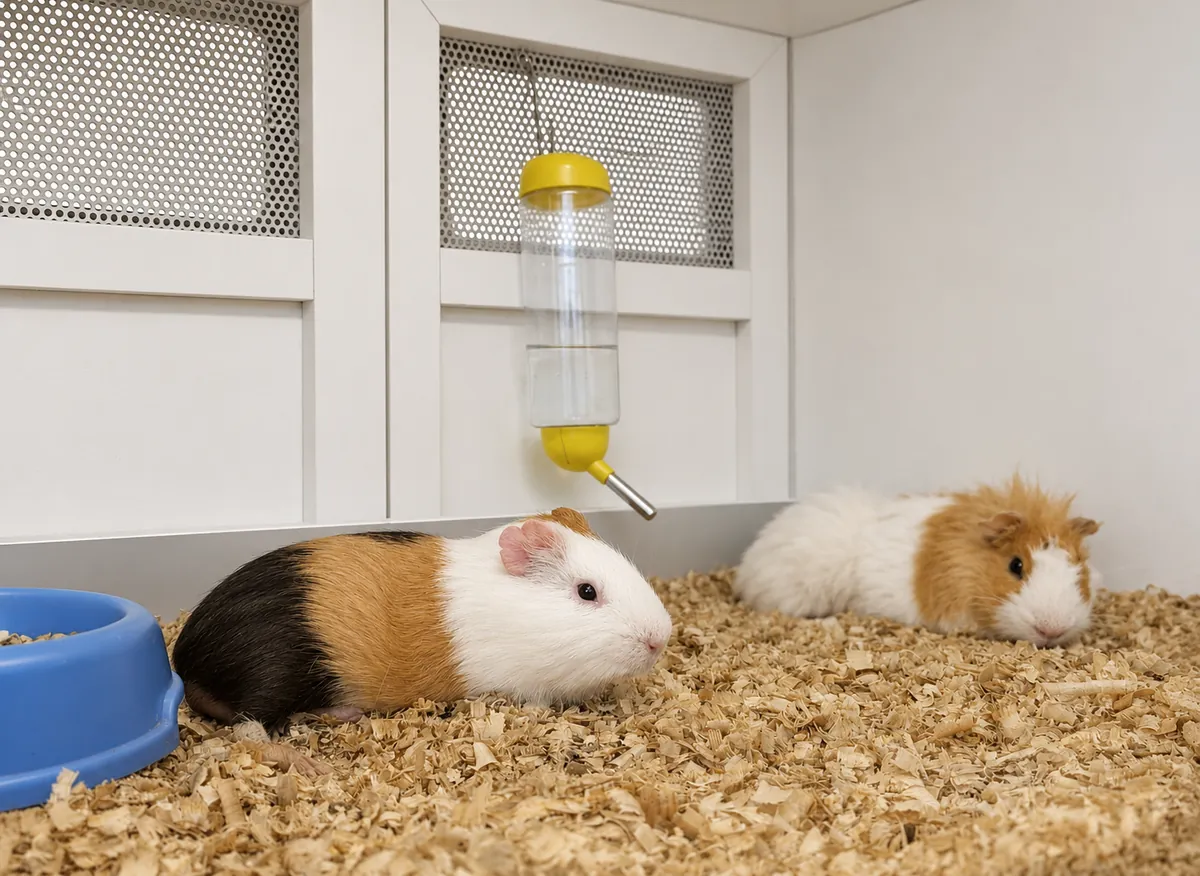
Round, gentle and surprisingly chatty, the guinea pig (Cavia porcellus) is one of the world’s most popular small pets. The two animals shown here have the colourful coats this species is known for. Here are the essentials.
Quick facts
| Scientific name | Cavia porcellus |
|---|---|
| Origin | The Andes of South America (domesticated) |
| Wild relatives’ habitat | Grassland and rocky areas in the Andes |
| Adult size | About 20 to 25 cm long; roughly 0.7 to 1.2 kg |
| Lifespan | About 5 to 8 years |
| Diet | Plant eater: hay, fresh vegetables and pellets, plus daily vitamin C |
| Activity | Most active at dawn and dusk |
| Social life | Lives in groups |
What is a guinea pig?
Despite the name, guinea pigs are not pigs and do not come from Guinea. They are rodents from South America. They have no visible tail, and they come in many coat types: smooth, ruffled with swirls called rosettes, or long and silky, in colours from white to black, orange and combinations of all three.
Where do guinea pigs come from?
Guinea pigs descend from wild cavies that live in the Andes mountains of South America, in grassland and rocky areas. People there began keeping them thousands of years ago. The domestic guinea pig no longer exists in the wild.
How big are they?
An adult is about 20 to 25 cm long and weighs roughly 0.7 to 1.2 kg, with males usually heavier than females. With good care a guinea pig lives about 5 to 8 years.
What do guinea pigs eat?
Guinea pigs are herbivores. Most of their diet is grass hay, which keeps their teeth worn down, because a rodent’s teeth never stop growing. They also eat fresh vegetables and plain pellets. Like humans, they cannot make their own vitamin C, so they need to get it from their food every day.
A day in the life
Guinea pigs are most active at dawn and dusk, with short naps and snacking through the day and night. They are prey animals, so they stay alert, freeze when startled and like to have somewhere to hide.
Family life
Guinea pigs are highly social and live in small groups. They talk to each other with a range of sounds: a loud “wheek” when excited, a soft purr when content and a low rumble when courting or asserting themselves.
Did you know?
Baby guinea pigs are born with fur and open eyes, and can run within hours of birth. Happy young guinea pigs sometimes leap into the air with a twist, a move called popcorning. They also eat special soft droppings to absorb extra nutrients, which is normal and healthy.
In captivity
Guinea pigs need company, so they are best kept in pairs or small groups. They need a roomy enclosure with floor space to run, a hiding place for each animal, clean dry bedding (avoid cedar shavings), unlimited hay, fresh water and fresh vegetables every day. They are sensitive to heat: about 18 to 24 °C is comfortable, and temperatures above about 27 °C can cause heatstroke, so they must be kept somewhere cool, shaded and well ventilated.